Call Us Today!
(425) 999-8159
New Patients
(425) 264-7102


Every year millions of cases of dental and facial injuries occur as the result of sport-related trauma. While all sports have some risk of oral injury, it is especially prevalent in recreational activities that involve frequent body contact with other players or the ground, as well as the possibility of being struck by other objects such as, balls, bats, or sticks.
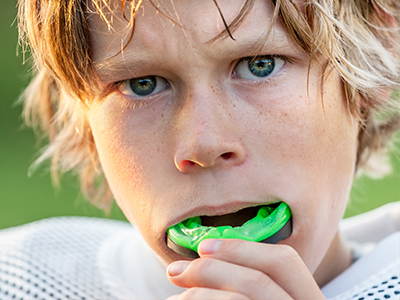
One way to significantly reduce the risk of damage to your teeth, cheeks, lips, tongue, face, or jaw as the result of a sports-related injury is to wear a mouthguard. A mouthguard is a removable appliance made of a sturdy plastic that sits comfortably over your teeth. Typically, mouthguards are designed to cover just the top teeth but may also be fabricated to include the lower teeth as well depending on your particular situation. Individuals who wear braces or have some types of dental work may require a specific type of mouthguard that provides more coverage.
There are three types of sports mouthguards on the market, including pre-formed and ready to wear stock mouthguards, boil and bite mouthguards, and custom mouthguards fabricated by your dentist. Our office will help you to select just the right sports mouthguard to protect your smile. While the first two choices offer some level of protection, the best and most comfortable mouthguards to safeguard your smile are the ones individually designed and customized by your dentist.
A sports mouthguard is a removable oral appliance designed to protect the teeth, gums, lips, cheeks and tongue during athletic activity. It sits over the teeth and is fabricated from impact-absorbing materials to help distribute and reduce the force of blows to the mouth. Mouthguards are commonly worn on the upper arch, although lower-arch or dual-arch designs may be recommended in certain situations.
Wearing a properly fitting mouthguard significantly lowers the chance of dental fractures, tooth avulsions and soft tissue lacerations from collisions or falls. In addition to protecting teeth, a mouthguard can help reduce risk of injuries to the jaw and adjacent facial structures by absorbing and dispersing energy from an impact. Because mouthguards are removable, they are easy to inspect, clean and replace as needed.
There are three primary categories of mouthguards: stock, boil-and-bite and custom-made appliances. Stock mouthguards are pre-formed and ready to wear but often offer the poorest fit and comfort, while boil-and-bite options improve fit by softening the tray in hot water so the wearer can mold it around the teeth.
Custom mouthguards are fabricated by a dental professional from an impression or digital scan of the mouth and provide the best balance of fit, retention and protection. Your dentist can evaluate your sport, dental anatomy and any restorative or orthodontic work to recommend the most appropriate style and thickness.
Custom mouthguards are tailored to your bite and oral anatomy, producing superior fit, comfort and retention compared with off-the-shelf alternatives. A precise fit reduces movement during play, improves breathing and speaking, and limits the likelihood of soft-tissue injuries caused by ill-fitting appliances.
Because custom devices are crafted to match your occlusion and any appliances such as bridges or implants, they distribute impact forces more evenly and can be adjusted by your dentist for optimal performance. This personalized approach also minimizes irritation and helps ensure the athlete will wear the guard consistently.
Any athlete participating in contact or collision sports should consider a mouthguard, including football, hockey, lacrosse, rugby, martial arts and certain field and court sports where falls or strikes are possible. Even in lower-contact activities such as baseball, basketball or skateboarding, unexpected impacts, falls or projectiles can cause dental trauma.
Young athletes, individuals with prior dental restorations, and people undergoing orthodontic treatment are at particular risk and often benefit from a more protective, customized appliance. A dental professional can assess individual risk factors and recommend the right type of mouthguard for each athlete.
Custom mouthguards begin with an accurate record of the teeth, obtained either from a traditional dental impression or a digital intraoral scan. That model is used to fabricate a multi-layered appliance in a dental laboratory, where materials are shaped and layered to provide desired thickness, resiliency and comfort.
After fabrication the dentist verifies fit and makes any necessary adjustments to ensure retention, occlusion and comfort during breathing and speech. At the office of 360 Dental of Mill Creek we follow a careful fit and adjustment protocol so athletes receive a device that protects effectively while remaining comfortable during play.
Rinse your mouthguard with cool water after each use and clean it regularly with a soft toothbrush and mild, nonabrasive soap or a dentist-recommended cleaner. Avoid exposing the appliance to high heat such as hot water, direct sunlight or car dashboards, as heat can warp the material and compromise fit.
Store the mouthguard in a ventilated, protective case between uses and inspect it routinely for tears, thinning or other damage. Replace or bring a damaged or poorly fitting guard to your dentist for evaluation rather than attempting home repairs.
A properly fitting mouthguard should stay securely in place without excessive clenching and should allow you to breathe and speak with minimal obstruction. The guard should cover the biting surfaces and extend to protect the gums and adjacent soft tissues without causing pain or gagging.
If the appliance shifts, causes persistent soreness, interferes with breathing or speech, or places undue pressure on teeth, schedule an evaluation with your dentist. Minor adjustments can improve comfort and retention, but a poorly fitting guard may need to be remade to ensure adequate protection.
Replace a mouthguard if it shows signs of wear such as thinning, tears, punctures or permanent deformation, and always replace it after a significant impact that may have compromised its structure. Regular inspection before and after play helps identify damage early so a worn guard is not used unknowingly.
Children and adolescents often require more frequent replacement as their teeth and jaws change during growth, and adults should have their guard reviewed periodically by a dental professional. Your dentist can recommend a replacement interval based on wear patterns, material and the specific demands of your sport.
Yes, but athletes with braces, bridges, implants or other dental restorations usually require a specially designed mouthguard to protect both the appliance and surrounding tissues. Standard stock or boil-and-bite guards may not accommodate brackets or may create pressure points that can damage dental work or cause soft-tissue injury.
Custom mouthguards can be fabricated to fit over orthodontic appliances or to protect vulnerable restorations while maintaining proper occlusion and comfort. Discuss your dental history and current appliances with your dentist so the guard can be designed to address those needs effectively.
Sports mouthguards are typically made from durable, impact-absorbing polymers such as multi-layered ethylene vinyl acetate (EVA) or comparable medical-grade materials selected for resilience and long-term use. These materials are processed in dental laboratories to create layered constructions that balance shock absorption with thinness for improved comfort and function.
When fabricated and maintained according to professional guidance, mouthguards are considered biocompatible and safe for daily use during athletic activity. If you have a specific material sensitivity or concern, discuss alternatives with your dental provider to ensure the appliance meets both safety and performance needs.