Call Us Today!
(425) 999-8159
New Patients
(425) 264-7102


If your dentist has recommended a root canal, there’s no reason to panic. Modern root canal treatment is a reliable way to relieve intense tooth pain, stop infection, and keep your natural tooth in place — often making it a better long-term choice than extraction. With contemporary techniques and careful attention to comfort, most patients find the experience far less stressful than they imagined.
At the office of 360 Dental of Mill Creek, we combine advanced diagnostic tools with a gentle, patient-centered approach so you can feel confident about treatment choices. Comfort, clear communication, and predictable outcomes guide each step of care when a tooth needs more than a routine filling.
Keeping a natural tooth whenever possible helps preserve the function and appearance of your smile. A tooth that is treated with root canal therapy can chew, look, and feel like other teeth once it is properly restored. Preserving the tooth also protects neighboring teeth from shifting and reduces the need for more extensive procedures later on.
Root canal treatment focuses on removing infected or irreversibly inflamed pulp tissue inside the tooth, then cleaning and sealing the internal spaces. When performed with careful technique and appropriate materials, success rates are high and many treated teeth remain comfortable and useful for years — often a lifetime.
Choosing to treat and restore a compromised tooth avoids the bone loss and smile changes that can follow extraction. In addition, modern restorative options — such as a well-fitted crown — can return strength and protect the tooth from future fracture, helping you maintain a stable, confident bite.

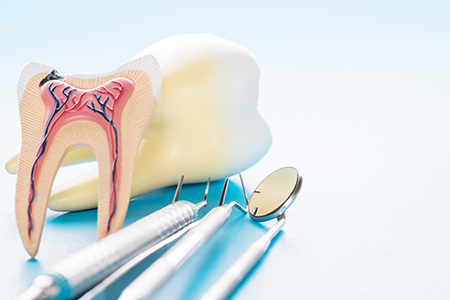
Under the hard enamel and dentin of each tooth lies the pulp chamber, a soft core made up of nerves, blood vessels, and connective tissue. When bacteria penetrate deep decay or a traumatic injury disrupts the pulp, inflammation or infection can set in. Because the pulp sits in a confined space, swelling and pressure can lead to sharp pain and increasing damage if left untreated.
In some cases the pulp can be repaired if the damage is limited and treatment begins quickly. When inflammation becomes irreversible or the tissue dies, the infection may travel down the root and affect the supporting bone around the tooth’s tip. That’s when root canal therapy becomes the recommended way to remove the source of infection and allow healing to begin.
Not every injured or sensitive tooth requires root canal treatment, but understanding how an untreated infection can compromise surrounding bone and adjacent teeth highlights why timely evaluation is important. Early intervention often preserves more of the natural tooth structure and simplifies the restoration needed afterward.
Symptoms can vary, but certain warning signs commonly point to significant pulp involvement. Lingering or severe toothache — especially pain that wakes you at night or persists after removing hot or cold stimuli — is a frequent indicator that the pulp is irritated or infected. Pain that increases with pressure or when biting should also prompt a prompt dental assessment.
Sensitivity that lingers long after eating or drinking hot or cold items, or a tooth that appears darker than its neighbors, can both signal internal changes. Facial or gum swelling near a tooth, or the presence of a small bump on the gum that sometimes drains fluid, are signs that an infection is present and needs professional care.
In some cases a tooth with a serious problem shows few symptoms at first and is identified during a routine exam or on an X-ray. Because symptoms can be subtle or develop slowly, regular dental checkups are an important way to catch concerns early and avoid more complex treatment down the road.

Root canal therapy is performed with the goal of removing diseased tissue, disinfecting the internal anatomy of the tooth, and sealing it to prevent reinfection. Most procedures are completed under local anesthesia so you should feel minimal to no discomfort during treatment. We take extra steps to ensure a calm experience and can discuss sedation options if needed for anxiety management.
The length and number of appointments vary depending on the tooth’s anatomy and whether an active infection is present. A straightforward case can often be treated in a single visit, while more involved situations may require additional visits to reduce infection and monitor healing before final restoration.
During treatment, the dentist isolates the tooth, accesses the pulp chamber, gently cleans and shapes the root canals, and places a biocompatible filling material and seal. Once the canals are filled and sealed, the tooth is prepared for a permanent restoration — commonly a crown — that restores strength and function.
After treatment some tenderness around the tooth and jaw is normal for a few days as the tissues heal. Over-the-counter pain relievers usually handle routine discomfort, and our team will explain safe options and any prescription medications if they are indicated. If you were prescribed antibiotics for an active infection, it’s important to complete the full course as directed.
A temporary filling is often placed after the root canal; the treated tooth will need a permanent restoration — typically a crown — to restore full function and protect it from fracture. Because the tooth can be more brittle after treatment, placing a durable crown sooner rather than later reduces the risk of reinjury.
Long-term success depends on maintaining good oral hygiene, keeping up with regular dental exams, and addressing new concerns early. With proper care, a tooth that has undergone root canal therapy can remain in service and pain-free for many years, supporting your oral health and overall comfort.
At the office of 360 Dental of Mill Creek, we aim to make root canal treatment as comfortable and predictable as possible, guiding patients through each step from diagnosis to final restoration. If you’re experiencing tooth pain, sensitivity, swelling, or any other concerning symptoms, please contact us for more information and to schedule a prompt evaluation.

Root canal therapy treats the soft inner tissue of a tooth, called the pulp, when it becomes inflamed or infected due to deep decay, cracks, or trauma. The goal of the procedure is to remove the diseased tissue, disinfect the internal canals, and seal the space to stop the spread of infection. Preserving the natural tooth helps maintain chewing function and the alignment of surrounding teeth.
Treated teeth can often be restored to full function with an appropriate permanent restoration and maintained for many years with good care. Modern techniques make the procedure predictable and focused on patient comfort. Early diagnosis and treatment typically improve outcomes and reduce the risk of complications.
Your dentist will evaluate symptoms, dental history, and clinical findings to determine if the pulp is compromised. Common diagnostic tools include a thorough oral exam, percussion and bite tests, thermal sensitivity tests, and dental radiographs or CBCT imaging to view root anatomy and any bone changes. These steps help distinguish reversible irritation from irreversible pulp damage or abscess formation.
Sometimes a problematic tooth shows few symptoms and is identified on routine X-rays, which is why regular dental exams are important. When infection or irreversible inflammation is suspected, prompt assessment allows timely treatment planning that preserves as much natural tooth structure as possible. The dentist will discuss the diagnosis and recommended options so you can make an informed decision.
The procedure typically begins with local anesthesia to ensure you feel minimal to no discomfort, followed by isolation of the tooth to maintain a clean working field. The dentist then creates a small access point to remove the infected or inflamed pulp, carefully cleans and shapes the canals, and places a biocompatible filling material to seal the space. Advanced instruments and disinfecting protocols help ensure thorough cleaning of complex anatomy.
The number of visits depends on the tooth and the presence of active infection; straightforward cases are often completed in a single appointment while others may require additional visits. After canal therapy, the tooth receives a temporary filling and is later restored permanently, commonly with a crown to provide long-term strength and function. Your dentist will review sedation options and aftercare instructions to support a calm, successful visit.
Most patients experience little to no pain during the procedure because effective local anesthesia is administered before work begins. The sensation you may recall is typically the pressure of treatment rather than sharp pain, and our team can discuss anxiety management or sedation options if needed to make the visit more comfortable. Communication during the appointment ensures adjustments are made for your comfort at every step.
After the procedure, some tenderness or mild soreness around the treated tooth and jaw is normal for a few days as tissues heal. Over-the-counter pain relievers are usually sufficient to manage recovery discomfort, and your dentist will advise on any prescription medications only when appropriate. If you experience severe pain, swelling that worsens, or other concerning symptoms, contact the office for prompt evaluation.
Initial healing commonly takes a few days, during which you may notice mild tenderness or sensitivity when biting, but most routine activities can be resumed quickly. The treated tooth often receives a temporary filling and will later require a permanent restoration, typically a crown, which helps restore full function and protects the tooth from fracture. Complete healing of surrounding bone after an infection can take several months, depending on the severity prior to treatment.
Follow-up appointments are important to confirm healing and to place the final restoration in a timely manner to reduce the risk of reinjury. Maintaining good oral hygiene and attending regular dental checkups support the long-term success of the treatment. Your dentist will provide specific aftercare instructions tailored to your case and monitor healing at subsequent visits.
Preserving a natural tooth helps maintain proper chewing function, supports surrounding teeth, and prevents the bone loss that can follow extraction. Keeping your own tooth avoids the need for more involved replacement options and helps maintain the natural contours of your bite and smile. A restored, root canal–treated tooth can often function for many years when properly cared for.
While extraction followed by a replacement such as an implant or bridge is a viable option in some cases, saving the tooth when clinically appropriate is usually the simplest way to avoid additional procedures. Your dentist will discuss the relative benefits and long-term considerations of all treatment choices so you can select the option that best meets your oral health goals. Timely treatment also reduces the chance of more extensive restorative work later on.
Although root canal therapy has high success rates, reinfection can occur if bacteria re-enter the canals or if complex anatomy prevents complete cleaning during the initial treatment. Prevention focuses on thorough canal disinfection, a complete coronal seal, and timely placement of a durable final restoration to protect the internal filling. Good oral hygiene and regular dental visits further reduce the risk of problems developing over time.
If symptoms recur or radiographs show persistent infection, retreatment or endodontic surgery (apicoectomy) may be recommended to address residual disease. These procedures aim to remove infected tissue, reseal the canals, and preserve the tooth whenever feasible. Your dentist will evaluate the situation and explain the most appropriate clinical approach based on the tooth’s condition.
Molars often have multiple canals with curved or branching anatomy, which can make treatment more challenging than on single-rooted teeth. Modern endodontic techniques, including rotary instruments, magnification, and three-dimensional imaging such as CBCT, improve the ability to locate and clean complex canal systems effectively. These tools enhance precision and help clinicians manage difficult anatomy while minimizing procedural risk.
In some cases, a general dentist may recommend collaboration with or referral to an endodontic specialist when anatomy or infection complexity suggests specialized care will improve outcomes. Coordinated care ensures patients receive the most appropriate expertise for predictable results. Your dentist will discuss the treatment plan and any referrals if they are in your best interest.
Once root canal therapy is complete, the tooth is initially sealed with a temporary filling, and a permanent restoration is placed at the next stage to restore strength and function. Molars and premolars commonly receive crowns because these teeth endure the greatest chewing forces and the restoration helps prevent fracture of the treated tooth. The type of permanent restoration depends on the tooth’s location, remaining structure, and esthetic needs.
Timely placement of the final restoration is critical because a root canal–treated tooth can be more brittle than a vital tooth and is susceptible to structural damage without protection. Proper restoration also ensures a good seal against bacterial recontamination and supports long-term success. Your dentist will plan the appropriate restoration and explain how to care for it to maximize longevity.
Seek prompt dental attention for severe, persistent tooth pain, swelling of the face or gums, a visible abscess or draining bump on the gum, or any signs of systemic involvement such as fever. These symptoms can indicate an active infection that may spread if untreated and often requires urgent evaluation and management. Early care can reduce the risk of complications and improve the chances of saving the affected tooth.
If you are experiencing these signs, contact 360 Dental of Mill Creek to arrange a timely assessment so an appropriate treatment plan can be initiated. The dental team will prioritize urgent needs and explain the next steps for relieving discomfort and addressing the underlying cause. If you have difficulty breathing or swallowing, seek emergency medical care immediately.