Call Us Today!
(425) 999-8159
New Patients
(425) 264-7102


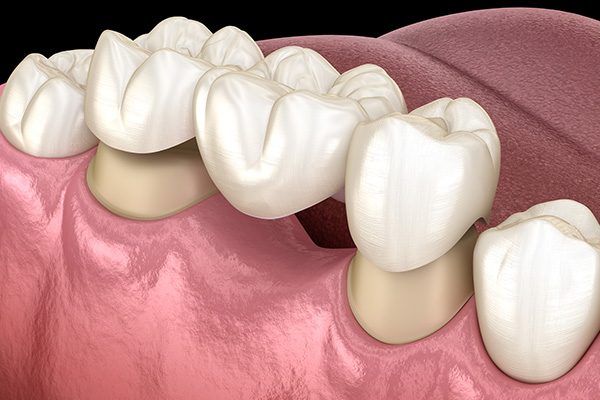
An implant-supported bridge replaces several missing teeth in a way that closely mimics natural function and appearance. Rather than relying on adjacent teeth for support, this restoration is anchored to dental implants that are placed directly in the jawbone. That foundation restores chewing efficiency and bite force, allowing patients to eat and speak with greater confidence and comfort than many traditional prostheses.
Beyond restoring day-to-day function, implant-supported bridges help preserve the underlying bone where teeth have been lost. Implants transmit the mechanical forces of chewing to the jaw, stimulating the bone much like natural tooth roots. This stimulation slows or prevents the bone resorption that often follows tooth loss and contributes to changes in facial contours over time.
Because the bridge does not depend on neighboring teeth for support, the health and structure of adjacent natural teeth are preserved. This approach avoids the need to alter otherwise healthy teeth to anchor a restoration, which is one of the important distinctions between implant-supported bridges and conventional fixed bridges.
Successful implant-supported bridge treatment begins with comprehensive planning. Digital imaging—such as CBCT scans and intraoral scans—gives the dental team a precise view of bone anatomy, nerve pathways, and the spatial relationships needed to plan implant placement. This planning stage helps the clinician determine the number, size, and ideal position of implants to support the bridge reliably.
Placement of implants is performed under controlled clinical conditions. Once implants are placed into the jaw, a period of healing called osseointegration allows the implant surface to fuse with the bone. This phase is crucial for long-term stability and can vary in duration depending on bone quality and the patient’s overall health.
After osseointegration, the restorative phase begins. Abutments are attached to the implants and a custom bridge is fabricated to fit precisely over them. The restorative materials and design are selected to balance strength, function, and a natural appearance. Final adjustments ensure comfortable occlusion and a harmonious smile.
Ideal candidates are patients who are missing multiple adjacent teeth and who wish to avoid preparing neighboring teeth for a traditional bridge. Adequate bone volume and density at the implant sites are important factors, as they influence the ability to achieve stable implant placement and long-term success.
A thorough medical and dental evaluation helps identify factors that may affect healing, such as smoking, uncontrolled systemic conditions, or certain medications. In many cases, previously unsuitable candidates can become eligible with preparatory treatments—like bone grafting or periodontal care—that build a healthier foundation for implants.
Ultimately, candidacy is determined on an individual basis. Diagnostic imaging, a clinical exam, and a discussion about a patient’s goals and expectations allow the dental team to recommend the most appropriate restorative option, whether that is an implant-supported bridge or another approach better suited to the patient’s needs.
Once an implant-supported bridge is in place, ongoing care focuses on maintaining healthy tissues around the implants and the longevity of the restoration. Daily oral hygiene—brushing twice a day and cleaning around and between the bridge components—is essential. Special flossing tools, interdental brushes, or water flossers are often recommended to keep the implant sites clean.
Regular dental visits are important for professional maintenance and early detection of potential concerns. During these visits, the team will evaluate soft tissue health, check for signs of inflammation, and monitor the condition of the bridge and supporting implants. Periodic professional cleanings help control plaque and calculus that can compromise long-term success.
With proper home care and routine professional oversight, implant-supported bridges can provide many years of stable function. Patients should also be mindful of habits that put excessive force on restorations—such as clenching or chewing very hard objects—and discuss protective options if necessary.
Modern implant dentistry relies on precise diagnostics and coordinated restorative planning. Technologies commonly used in contemporary practice—like three-dimensional radiography and digital impression systems—allow for highly accurate treatment planning and predictable outcomes. This integration reduces surprises during surgery and supports well-fitting long-term restorations.
Restorative materials have also evolved, offering strong, lifelike options that blend durability with esthetics. The bridge design and materials are chosen to match a patient’s functional demands and cosmetic goals while ensuring reliable performance under normal chewing forces.
Coordination between surgical and restorative phases is key. A well-executed plan considers both the implant positions that will optimize support and the final prosthetic contours that will restore a natural smile and comfortable occlusion. When these elements are aligned, the result is a restoration that looks, feels, and functions like natural teeth.
At the office of 360 Dental of Mill Creek, our team works closely with each patient to develop individualized plans that reflect clinical needs and personal goals. Dr. Jasmeet Punia and the staff emphasize careful planning, informed decision-making, and clear communication throughout the process to help patients move forward with confidence.
To learn more about implant-supported bridges and whether they are the right option for you, please contact us for more information. Our team can explain the evaluation process and what to expect at each stage of treatment.
An implant-supported bridge is a fixed dental restoration that replaces two or more missing adjacent teeth by anchoring a prosthetic bridge to dental implants placed in the jaw. Unlike conventional bridges that rely on neighboring teeth for support, implant-supported bridges are secured to titanium implants that act as artificial tooth roots, restoring chewing function and speaking ability. This approach recreates the look and feel of natural teeth while minimizing stress on remaining healthy teeth.
In addition to functional restoration, implant-supported bridges help preserve the jawbone by transmitting chewing forces into the bone and maintaining normal stimulation. This bone preservation reduces the progressive bone loss that commonly follows tooth extraction and helps maintain facial contours over time. For many patients, the result is improved comfort, stability, and confidence compared with removable prostheses.
A traditional fixed bridge is supported by preparing adjacent natural teeth to receive crowns, which then support the replacement teeth between them. An implant-supported bridge, by contrast, is anchored to implants placed in the jaw, so the surrounding natural teeth typically remain untouched and structurally preserved. This distinction can be important for long-term oral health because it avoids unnecessarily altering healthy tooth enamel and structure.
Functionally, implant-supported bridges often provide greater stability and chewing efficiency than conventional bridges or removable options because implants integrate with the bone. They also contribute to bone maintenance at the sites of missing teeth, a benefit that traditional bridges cannot provide. Treatment planning and surgical considerations differ as well, so clinicians weigh the patient’s bone health, overall medical status, and restorative goals when recommending the best option.
Good candidates are patients who are missing multiple adjacent teeth and have adequate bone volume and density at the prospective implant sites. A thorough clinical exam and diagnostic imaging, such as three-dimensional radiography and intraoral scans, help determine whether the jawbone can support implants or if preparatory procedures like bone grafting are needed. Health factors that affect healing—such as uncontrolled systemic conditions, smoking, or certain medications—are also evaluated to assess candidacy.
Candidacy is individualized and may change with preparatory care; patients who initially lack sufficient bone or have periodontal disease can often become eligible after targeted treatments. The patient’s expectations, oral hygiene habits, and commitment to follow-up care also play important roles in successful long-term outcomes. A detailed consultation with the dental team clarifies risks, benefits, and alternative restorative options to arrive at the most appropriate plan.
Implant-supported bridge treatment begins with comprehensive planning that integrates clinical examination and advanced imaging to map bone anatomy, nerve pathways, and tooth relationships. Cone beam computed tomography (CBCT) scans and digital intraoral scans provide three-dimensional detail that guides implant number, size, and optimal position for prosthetic support. This digital workflow helps reduce surprises during surgery and improves the fit and esthetics of the final restoration.
From the diagnostic data, the team creates a surgical and restorative plan that considers occlusion, esthetic contours, and soft-tissue support to achieve a harmonious final result. When indicated, guided implant placement using surgical templates can translate the virtual plan into precise clinical execution. Clear communication between surgical and restorative providers ensures the implants are placed to best support the bridge design and long-term function.
The surgical phase involves placing dental implants into the jawbone under controlled clinical conditions, typically using local anesthesia and, when appropriate, sedation options to maximize patient comfort. After implant placement, a healing period called osseointegration allows the implant surfaces to fuse with bone; the duration of this phase varies based on bone quality and individual healing capacity. Temporary restorations may be used during healing to maintain esthetics and function in some cases.
Once osseointegration is sufficient, the restorative phase begins with placement of abutments and fabrication of the custom bridge that will attach to the implants. The bridge is designed to balance strength, function, and esthetics and is adjusted to ensure comfortable occlusion and proper speech. Final polishing and occlusal checks complete the process, and patients receive instructions for care and follow-up maintenance.
Implant-supported bridges can be fabricated from a variety of modern restorative materials chosen for strength and lifelike esthetics, including porcelain-fused-to-zirconia, full-contour zirconia, and layered ceramic materials. These materials are selected based on the patient’s functional demands, esthetic goals, and the position of the restoration in the mouth. Skilled laboratory techniques and digital shade matching help ensure that the prosthetic teeth blend seamlessly with adjacent natural teeth.
Surface textures, translucency, and color layering can be customized to mimic natural tooth anatomy and reflect light similarly to enamel, producing a highly natural appearance. The final result depends on precise communication between clinician and dental laboratory as well as accurate digital impressions or models. When designed and fabricated correctly, implant-supported bridges provide both durable function and a pleasing, natural-looking smile.
Daily oral hygiene is essential for the long-term success of an implant-supported bridge and should include thorough brushing twice a day and cleaning around and between prosthetic components. Specialized tools such as floss threaders, interdental brushes, and water flossers can make it easier to remove plaque from beneath the bridge and around implant abutments. Patients should follow the home-care regimen recommended by their dental team and maintain consistent habits to reduce the risk of inflammation around the implants.
Avoiding habits that place excessive force on the restoration—such as chewing ice, hard objects, or using teeth as tools—helps protect the bridge from undue stress. If you notice looseness, persistent soreness, or signs of inflammation, contact your dental provider promptly for evaluation. Early intervention can address issues before they compromise the longevity of the restoration.
Regular dental visits are important to monitor tissue health, check implant stability, and assess the condition of the bridge and surrounding structures. The dental team will perform periodic professional cleanings and may use specialized instruments and protocols to remove plaque and calculus without damaging implant surfaces. Routine examinations also provide an opportunity to detect early signs of peri-implant inflammation or occlusal wear and to make timely adjustments.
Follow-up frequency is individualized but typically includes more frequent visits during the first year after restoration and periodic recall thereafter to ensure continued success. Radiographic evaluations may be used to monitor bone levels around implants over time. Maintaining scheduled appointments and following professional recommendations are key factors in achieving predictable, long-lasting results.
As with any surgical procedure, implant placement carries risks such as infection, bleeding, nerve irritation, or failure of osseointegration, although these events are relatively uncommon with proper planning and technique. Peri-implant mucositis and peri-implantitis—inflammatory conditions affecting the tissues around implants—can occur if plaque control is inadequate or if underlying risk factors are present. Early detection through routine exams and prompt treatment of inflammation are critical to prevent more advanced complications.
Management strategies for complications depend on the underlying cause and severity and may include improved oral hygiene measures, professional debridement, local or systemic therapy, or surgical intervention when necessary. Thorough preoperative assessment, patient education, and adherence to follow-up care reduce the likelihood of adverse outcomes. Your dental team will discuss risk-reduction strategies and steps to take if concerns arise.
Advanced diagnostic tools such as CBCT imaging, digital intraoral scanning, and computer-aided treatment planning enhance precision by providing three-dimensional views of bone anatomy and soft tissue relationships. These technologies enable accurate selection of implant size and position, facilitate guided surgical placement when appropriate, and help design prosthetics that fit precisely and function predictably. The result is reduced surgical variability and improved prosthetic outcomes.
Digital workflows that integrate surgical planning with laboratory fabrication streamline the restorative process and improve communication between clinicians and technicians. The team at 360 Dental of Mill Creek integrates modern imaging and digital tools to tailor treatment plans to each patient’s anatomy and esthetic goals. When diagnostics, surgical execution, and restorative design are aligned, patients benefit from restorations that are more comfortable, durable, and natural-looking.