Call Us Today!
(425) 999-8159
New Patients
(425) 264-7102


Your dental team’s first goal is always to preserve natural teeth whenever possible. Yet there are times when extraction is the most responsible clinical decision to protect your comfort, function, and long-term oral health. Extractions can prevent the spread of infection, remove a source of chronic pain, and create the right environment for restorative care or orthodontic treatment.
Before recommending removal, our providers review your overall health, the condition of the tooth, and alternatives for saving the tooth. When extraction is the chosen path, the focus becomes a safe, low-stress experience with clear communication about what to expect before, during, and after the procedure.
We take a conservative, individualized approach: some teeth can be monitored or restored, while others pose risks to adjacent teeth, gum tissue, or bone. When removal is advised, our goal is to ensure the least invasive plan that supports your oral health goals going forward.
Retained primary (baby) teeth that impede normal eruption
Sometimes a primary tooth does not fall out on schedule because its root fails to resorb or the tooth becomes fused to the jawbone. When a retained baby tooth interferes with the eruption or proper alignment of a permanent tooth, a timely extraction can help the permanent tooth come in correctly and prevent future orthodontic complications.
Permanently damaged teeth with extensive decay
When decay destroys most of the tooth structure or invades the nerve and supporting tissues beyond repair, restoration may no longer be feasible. In such cases, removing the tooth eliminates infection risk and allows us to plan for replacement options that restore chewing function and protect surrounding teeth.
Severe fractures or structural failure
Teeth that are fractured below the gumline or have fragmented roots can be impossible to restore predictably. Extraction removes damaged tissue that could become a chronic source of pain or infection and enables a predictable path toward reconstruction when appropriate.
Advanced periodontal (gum) disease affecting support
When periodontal disease has eroded the bone and soft tissues that anchor a tooth, that tooth may become loose and no longer viable. Removing hopeless teeth can stop the progression of disease and make it easier to treat and stabilize neighboring teeth.
Impacted or problematic third molars (wisdom teeth)
Third molars often lack the space to erupt properly and can become impacted, infected, or cause damage to nearby teeth. Removing troublesome wisdom teeth can alleviate pain, reduce infection risk, and prevent crowding or damage to adjacent teeth.
Excessive crowding as part of orthodontic planning
When the jaws are too small to accommodate all permanent teeth, removal of specific teeth may be recommended to create space for predictable alignment during orthodontic treatment. Extractions in this context are planned carefully to support the desired functional and aesthetic outcome.
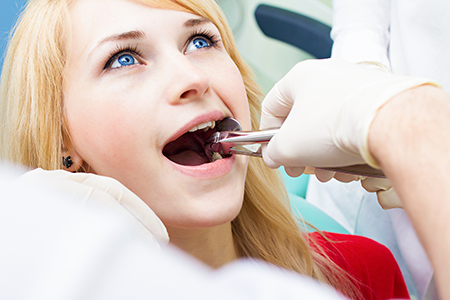
Every extraction begins with a thorough review of your medical and dental history to identify any conditions or medications that could affect care. We explain the procedure, confirm your comfort preferences, and make arrangements for any necessary precautions such as antibiotic coverage or medical clearance when indicated.
To accurately assess the tooth and surrounding structures, we use detailed clinical evaluation and digital radiographs. Imaging helps us determine root shape, proximity to nerves and sinuses, and whether a straightforward removal is possible or if a surgical approach is required.
Local anesthesia is used to numb the area thoroughly, and many patients benefit from additional relaxation methods. If anxiety or procedure complexity requires it, we discuss options for dental sedation so your visit is as calm and comfortable as possible.
Simple extractions are performed on teeth that are fully visible in the mouth and have uncomplicated root anatomy. After numbing the area, the dentist gently loosens the tooth and removes it using forceps. The technique is efficient, and most patients report minimal discomfort during the procedure when appropriate anesthesia is used.
Surgical extractions are used for teeth that are broken below the gumline, ankylosed, or impacted. This approach may involve a small incision, removal of a bit of bone, or sectioning the tooth to allow safe removal. These cases can be handled in-office by your dentist or referred to an oral and maxillofacial surgeon when specialized care is warranted.
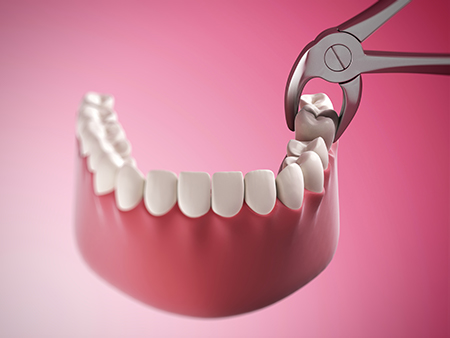
Recovery after an extraction varies with the complexity of the procedure and each patient’s healing response. We provide clear post-operative instructions tailored to your case, including guidance on pain control, activity limitations, and signs to watch for that would merit prompt attention.
Proper care in the first 24–72 hours is important to protect the healing site and reduce the chance of complications like dry socket. Following instructions about gauze use, diet, oral hygiene, and smoking restrictions helps the clot form and supports predictable healing.
We make sure you understand medication directions and any required follow-up visits. If sutures are placed, or if the case was complex, we schedule a check to evaluate healing and remove sutures if needed.
Apply gauze with steady pressure
Bite gently but firmly on the supplied gauze to help the site clot. Change the gauze only as directed; if bleeding persists, maintain pressure and contact the office.
Protect numb tissue
Avoid chewing, hot drinks, or biting the lip and cheek until normal sensation returns to prevent accidental injury while the area is numb.
Take prescribed medications as directed
If antibiotics or pain medication are prescribed, follow the instructions carefully. For pain control, taking an over-the-counter medication before numbness wears off can help reduce discomfort.
Protect the clot
Avoid rinsing vigorously, spitting, or using a straw for the first day or two so the forming clot remains undisturbed.
Manage swelling
An ice pack applied intermittently to the cheek can limit swelling during the first 24 hours. Use 10-minute on/off intervals as needed.
Avoid tobacco
Smoking and using other tobacco products significantly hinder healing and should be avoided for at least one week after the procedure.
Choose gentle foods
Start with soft, cool or room-temperature foods and plenty of fluids. Avoid spicy, hot, or carbonated beverages while the site is healing.
Maintain oral hygiene carefully
Keep the rest of your mouth clean with gentle brushing. After 24–48 hours, you may rinse gently with a warm saltwater solution to refresh the area, avoiding vigorous swishing.
Attend follow-up care
Return for any scheduled visits so the team can confirm proper healing and advise on next steps for restoration if needed.
If you notice persistent bleeding, increasing pain, unusual swelling, or an unpleasant taste or odor that does not improve, contact our office so we can assess and guide your care.
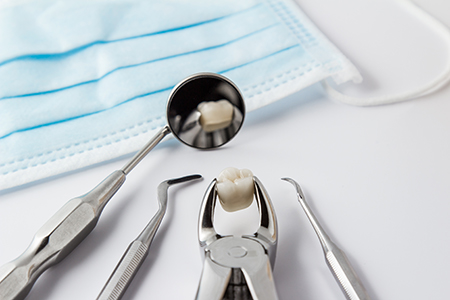
After extraction, many patients want to know how and when the tooth will be replaced. Replacement can preserve chewing ability, maintain facial structure, and prevent shifting of neighboring teeth. Options include removable prostheses, fixed bridges, and dental implants; the right choice depends on your oral health, bone support, and long-term goals.
When appropriate, we discuss immediate, delayed, or staged approaches to replacement. Sometimes placement of an implant or temporary restoration can begin soon after extraction, while in other situations it is better to allow the site to heal and, if necessary, rebuild lost bone before restoration.
We coordinate care to align with your overall treatment plan, whether that means working with in-house restorative specialists or referring to trusted colleagues for advanced surgical or implant procedures. Our priority is a predictable pathway from extraction to a functional, lasting restoration.
At 360 Dental of Mill Creek, we combine careful diagnosis, modern technology, and attention to patient comfort to make extractions as straightforward as possible. Our team explains options clearly, prepares a tailored treatment plan, and takes steps to minimize discomfort and support efficient recovery.
We emphasize safety and predictability: thorough pre-procedure screening, digital imaging to guide decisions, and an individualized pain-control strategy. When cases require specialist care, we coordinate referrals so you receive the right level of expertise without delay.
Whether you need a simple removal or a surgical extraction, our focus is on preserving oral health, restoring function, and helping you move forward with confidence. Contact us to learn more about tooth removal and the restorative options that follow; our team is available to answer your questions and guide next steps.

Your dental team aims to preserve natural teeth whenever possible, but extraction can be the most responsible clinical choice in certain situations. Common reasons include uncontrolled infection that threatens adjacent teeth or overall health, extensive decay or fractures that cannot be predictably restored, advanced periodontal disease that has compromised support, and impacted third molars that cause pain or damage. Extractions are also considered as part of orthodontic planning when crowding cannot be resolved by other means.
Before recommending removal, providers review medical history, clinical findings, and imaging to evaluate alternatives and plan the least invasive approach. At the office of 360 Dental of Mill Creek we consider restoration, monitoring, or extraction based on long‑term oral health and function. When extraction is advised, the intent is to protect surrounding tissues and create the best pathway for future restorative or orthodontic care.
A simple extraction is performed on a tooth that is fully visible in the mouth and has straightforward root anatomy; after local anesthesia the dentist gently loosens the tooth and removes it with forceps. These procedures are typically efficient and appropriate for mobile or accessible teeth that do not require bone removal or incision. Most patients experience minimal intraoperative discomfort when adequate anesthesia is used.
Surgical extraction is indicated when a tooth is broken at or below the gumline, ankylosed, impacted, or has complex root structure that prevents removal with forceps alone. The procedure may involve a small incision, removal of a bit of bone, or sectioning the tooth to allow safe extraction, and may require sutures. Surgical cases can be managed in‑office or referred to an oral and maxillofacial surgeon when advanced surgical skill or facilities are necessary.
Local anesthesia is the foundation of pain control for extractions, providing predictable numbness in the treated area. Many patients also benefit from adjunctive options such as nitrous oxide, oral sedation, or intravenous sedation when anxiety, medical history, or procedure complexity warrants deeper relaxation. The appropriate option is selected after reviewing your health, current medications, and the anticipated difficulty of the extraction.
Safety protocols include a thorough medical history, vital sign monitoring, and clear pre‑procedure instructions regarding fasting and medication adjustments when indicated. Your provider discusses risks, benefits, and recovery expectations for each sedation choice and coordinates additional medical clearance when required. The goal is a calm, well‑managed visit with effective pain and anxiety control tailored to your needs.
Initial care focuses on protecting the forming blood clot and minimizing bleeding and swelling. Bite gently but firmly on supplied gauze to maintain pressure, avoid rinsing vigorously, spitting, or using a straw during the first 24–48 hours, and keep the head elevated to reduce bleeding and swelling. Protect numb tissue by avoiding chewing or hot foods until normal sensation returns to prevent accidental injury.
Follow medication instructions precisely and use ice packs intermittently during the first 24 hours to manage swelling, applying 10 minutes on and 10 minutes off as needed. Begin with soft, cool or room‑temperature foods and gradually resume normal diet as comfort allows, and avoid tobacco for at least one week because smoking hinders healing. Maintain gentle oral hygiene around the site and perform warm saltwater rinses after 24–48 hours if advised to keep the area clean.
Dry socket, or alveolar osteitis, occurs when the blood clot protecting the extraction site becomes dislodged or fails to form, exposing bone and nerve endings and causing significant pain that typically begins two to four days after extraction. Symptoms can include severe, throbbing pain radiating to the ear or temple, an unpleasant taste or odor, and delayed healing. Certain factors such as smoking, poor oral hygiene, difficult surgical extractions, and hormonal influences can increase the risk.
Prevention focuses on following post‑operative instructions closely: avoid smoking, refrain from using straws or vigorous rinsing, and protect the clot by adhering to gauze and activity guidance. If dry socket does occur, evaluation and in‑office treatment are important; management may include gentle irrigation, placement of a medicated dressing to protect exposed bone, and targeted pain control while the site heals. Prompt communication with the dental team helps ensure appropriate care and symptom relief.
The timing and method for replacing a missing tooth depend on the condition of the extraction site, the presence of infection, bone volume, and your overall treatment goals. Options include immediate provisional restorations placed at the time of extraction when conditions permit, delayed implant placement after healing, dental implants with fixed restorations, fixed bridges that use adjacent teeth for support, and removable prostheses for temporary or long‑term replacement. The choice balances function, esthetics, and the biological needs of the site.
In some cases bone grafting or socket preservation is recommended at the time of extraction to maintain ridge dimensions and improve the long‑term success of implants or restorations. Your provider coordinates a personalized plan that may be staged—allowing initial healing before definitive restoration—or accelerated when immediate placement is clinically appropriate. Discussing restorative goals before extraction helps ensure a predictable pathway from removal to replacement.
Extractions are generally safe, but like any procedure there are potential risks that patients should understand. Common postoperative issues include bleeding, swelling, infection, and pain, while less common complications can include dry socket, temporary or rarely permanent nerve irritation, and for upper molars a possible communication with the sinus in select cases. The likelihood of complications depends on factors such as tooth position, root anatomy, systemic health, and adherence to post‑operative care.
Risk is reduced through careful preoperative assessment, use of digital imaging to guide treatment, appropriate antibiotic or medical coordination when indicated, and meticulous surgical technique. Early recognition and prompt management of complications improve outcomes, so patients are advised to contact their dental team if they experience increasing pain, prolonged bleeding, fever, or other concerning signs. Scheduled follow‑up visits allow the team to confirm healing and address any issues quickly.
Wisdom teeth frequently present challenges because there is often insufficient space for them to erupt fully, which can lead to impaction, pericoronitis, decay on adjacent teeth, and crowding. Impacted or partially erupted third molars can trap food and bacteria, increasing the risk of infection and damage to neighboring teeth and bone. Not all wisdom teeth require removal, but symptomatic teeth or those posing future risk are commonly recommended for extraction.
Evaluation typically includes a clinical exam and panoramic or CBCT imaging to assess position, root anatomy, and relationship to critical structures such as nerves and the sinus. Timing is individualized; earlier removal in late adolescence or early adulthood can be advantageous for certain cases, but decisions are based on symptoms, risk of pathology, and overall treatment goals. When removal is indicated, the plan is tailored to complexity and may range from simple in‑office extraction to surgical extraction with appropriate referral when needed.
Extractions in children are guided by growth, eruption patterns, and preserving space for permanent teeth, with special consideration given to retained primary teeth that impede normal eruption or cause crowding. The goal is to support proper dental development while minimizing trauma and anxiety; techniques include detailed behavioral management, local anesthesia, and, when appropriate, nitrous oxide or other sedation methods for cooperative care. Clinicians evaluate each case to determine whether monitoring, restoration, or extraction best supports long‑term occlusion and oral health.
Parents should expect clear pre‑ and post‑operative instructions, gentle technique appropriate for a child’s needs, and coordination with pediatric dental or orthodontic specialists when necessary. Follow‑up visits confirm healing and monitor eruption of permanent teeth, and early communication about space maintenance or orthodontic implications helps ensure favorable outcomes. Emphasis on home care and adherence to activity and diet recommendations supports uncomplicated recovery.
The practice combines careful diagnosis, modern imaging, and individualized treatment planning to provide safe, predictable extraction care tailored to each patient. Providers review medical history and radiographs, discuss anesthesia and sedation options, and recommend the least invasive approach that supports healing and future restorative goals. When complex surgical expertise is required, the team coordinates referrals to ensure patients receive the appropriate level of care without delay.
Emphasis is placed on patient comfort, clear communication about expectations and aftercare, and coordinated planning for tooth replacement when indicated. Follow‑up and post‑operative instructions are provided to reduce complications and support timely healing, and clinicians work with patients to determine the restorative pathway that best meets functional and esthetic objectives.