Call Us Today!
(425) 999-8159
New Patients
(425) 264-7102


Advances in dental materials, laboratory techniques, and clinical protocols have made modern dentures far more comfortable and lifelike than in the past. While fixed options such as dental implants and bridgework provide long-term solutions for many patients, a well-crafted removable denture remains a dependable and versatile choice for restoring a complete smile.
At the office of 360 Dental of Mill Creek, we design and fabricate dentures using high-quality materials and precise laboratory processes to deliver natural appearance, strong function, and a comfortable fit. Our focus is on creating dentures that support facial structure, allow clear speech, and let patients enjoy a broad range of foods with confidence.
We tailor each treatment plan to individual needs — considering oral health, jaw function, cosmetic goals, and daily life requirements — so patients receive a removable restoration that feels secure and looks natural. Whether you need a partial replacement or a full prosthesis, our goal is to restore both form and function.
Losing one or more teeth has effects that go beyond a gap in your smile. Teeth play a central role in chewing, speech, and maintaining the alignment of the remaining dentition. When teeth are missing, neighboring teeth can shift, bite patterns can change, and the jaw’s natural support for the cheeks and lips can diminish, altering facial contours over time.
The functional consequences are significant: missing teeth can make it harder to bite evenly, limit the range of foods you can eat comfortably, and sometimes cause speech changes. These challenges can affect nutrition, social confidence, and overall quality of life if left unaddressed.
Addressing tooth loss promptly helps preserve oral health and prevents some of the secondary problems that develop when spaces are left empty. Removable dentures—both partial and full—are a practical way to reestablish a full biting surface and protect the health and alignment of remaining teeth and tissues.
Dentures are restorations composed of artificial teeth set into a base that sits on the gums. The base is shaped to match the contours of the mouth and support the lips and cheeks, while the prosthetic teeth are selected to harmonize with your face, tooth color, and bite. Well-made dentures restore facial proportions and improve the appearance of a smile without appearing artificial.
Unlike fixed bridgework or individual dental implants, removable dentures can be taken out for cleaning and maintenance. This access makes it easier to keep both the prosthesis and the underlying tissues clean and healthy. Regular removal also allows the gums to rest overnight, which supports tissue health.
Contemporary denture materials and techniques prioritize both esthetics and function. Tooth shapes, shades, and positioning are chosen to produce balanced chewing patterns and a comfortable bite, while the base material is made to be strong yet lightweight for improved comfort and resilience.
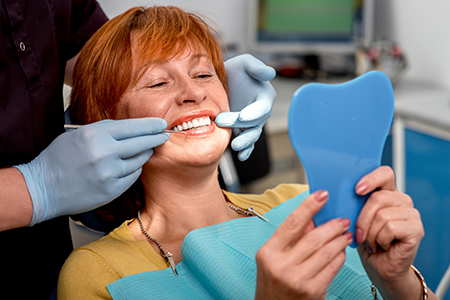
Choosing the most appropriate denture depends on how many natural teeth remain, the condition of those teeth, and your personal priorities for stability and convenience. Our clinical evaluation examines your oral tissues, existing teeth, bite relationships, and jaw function to recommend an option that balances comfort, appearance, and long-term health.
Removable solutions generally fall into two categories: full (complete) dentures and partial dentures. Full dentures replace all of the teeth in an arch when extractions or advanced tooth loss have left no serviceable dentition. Partial dentures replace one or several missing teeth and use the remaining teeth for support and retention.
Within these categories there are variations to improve fit and stability. For patients seeking greater retention, attachments or implant support can be integrated to reduce movement and improve chewing efficiency while retaining the advantages of a removable prosthesis.
Complete dentures are designed to replace every tooth in the upper or lower arch. One approach is to place a conventional denture after tissues have healed fully following extractions; this often yields a precise fit because the tissues have stabilized. Another approach is immediate dentures, which are inserted at the time of tooth removal so patients leave the appointment with teeth in place while healing occurs.
Immediate dentures prevent the temporary gap that follows extractions and can support appearance and function during healing. Because tissues change as they heal, immediate dentures typically require follow-up adjustments and may later be relined or replaced by a conventional denture for a long-term, more precise fit.
Overdentures
An overdenture gains additional support from remaining teeth or roots that have been prepared to receive attachments. This approach preserves bone and provides superior control and stability compared with a traditional complete denture.
Implant-assisted dentures
Implant-supported or implant-retained dentures connect to dental implants placed in the jaw. These attachments significantly increase retention and chewing function while allowing the prosthesis to be removable for cleaning and maintenance.
Partial dentures restore one or multiple missing teeth and prevent harmful drifting of adjacent teeth. They achieve retention with clasps, precision attachments, or a combination of frameworks and flexible materials. Advances in materials give patients choices ranging from traditional cast metal frameworks to lightweight, flexible resin options that can be more comfortable and esthetic.
Partial solutions are customized to protect the health of the remaining teeth while delivering a natural appearance. A thoughtful design reduces stress on supporting teeth and preserves the overall balance of the bite.
Our practice emphasizes durable fabrication and careful fit adjustments so partial dentures feel stable and integrate smoothly into daily routines. We evaluate each case to recommend the most appropriate design and material combination for long-term success.
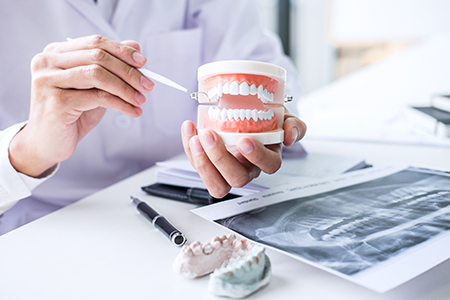
A successful denture begins with a detailed assessment that includes examination of the oral tissues, review of medical and dental history, and diagnostic imaging when indicated. These steps help identify potential obstacles — such as uneven ridges, sore spots, or the need for extractions — and guide decisions about the timing and type of prosthesis.
When extractions or pre-prosthetic procedures are necessary, we coordinate treatment so healing and tissue contours are optimized for the best possible fit. Impressions, bite registrations, and laboratory communication ensure the prosthesis aligns with facial proportions and occlusion for balanced function.
The laboratory phase is a collaborative one: tooth selection, base contouring, and try-in appointments allow both clinician and patient to evaluate esthetics and function before final processing. Attention to these details reduces the need for later adjustments and improves long-term comfort and performance.
Throughout the process, we discuss expectations clearly so patients understand the steps involved and the practical differences between conventional, immediate, overdenture, and implant-assisted approaches. This collaborative planning helps produce a denture that meets both clinical standards and patient goals.

Adjusting to a new denture is a process; most patients adapt within days to a few weeks as muscles learn new patterns for speaking and chewing. It’s normal to experience some increased saliva production, minor soreness, or slight changes in speech at first — these responses typically diminish as you become accustomed to the prosthesis.
Establishing a care routine is essential for long-term success. Daily cleaning of the denture with appropriate brushes and soaking solutions prevents buildup and helps maintain appearance. It’s equally important to care for any remaining teeth and soft tissues with gentle brushing and routine professional checkups.
For many denture wearers, supplemental retention strategies—such as adhesives or attachment systems—can improve confidence and function. If your denture begins to feel loose or shows uneven wear, a reline or adjustment may be recommended to restore fit and comfort.
Gradual adaptation
Give yourself time to adapt. Practice speaking aloud and start with softer, easily chewed foods; avoid biting large, hard items until you feel comfortable. Follow-up visits allow fine-tuning of the fit and relief of any sore spots.
Cleaning and overnight care
Rinse dentures after meals and brush them daily with a denture-specific brush. When not wearing them, keep dentures moist by soaking them in water or a recommended cleaner. Remove them at night to let gums rest and recover.
Ongoing maintenance and monitoring
Regular dental visits allow us to monitor oral health, evaluate the condition of remaining teeth, and check the fit of your denture. Over time, tissue changes may require relines or adjustments to maintain comfort and function.
Our team is committed to long-term care and will guide you through each stage — from initial planning and fabrication to periodic maintenance — so your denture remains a reliable part of daily life. If you have questions about which denture option is right for you or about caring for an existing prosthesis, please contact our office for more information.

Dentures are removable dental prostheses that replace missing teeth and the surrounding gum tissue to restore a full biting surface. The prosthetic teeth are set into a custom-shaped base that supports the lips and cheeks, helping reestablish normal speech, chewing patterns and facial proportions. While conventional dentures do not stop underlying bone resorption, they provide reliable replacement of form and function for many patients.
Well-designed dentures distribute chewing forces across the gum-bearing tissues and remaining teeth when present, which helps protect neighboring teeth from drifting into empty spaces. Modern materials and careful tooth selection allow clinicians to mimic natural tooth shape, color and occlusion for improved comfort and efficiency. For patients seeking additional stability, attachment systems or implant support can be combined with removable designs.
Missing teeth change the way the jaw supports the soft tissues of the face, which can lead to sunken cheeks or altered facial contours over time. Functionally, tooth loss disrupts efficient chewing, can change bite relationships and sometimes affects speech, all of which may limit dietary choices and daily comfort. These physical changes frequently influence emotional well‑being and confidence, making timely treatment important for overall health.
Leaving spaces untreated can also allow adjacent teeth to shift and increase wear on remaining dentition, potentially creating new oral health problems. Restoring missing teeth with partial or complete removable prostheses reestablishes a stable biting surface and helps preserve the alignment of remaining teeth. A comprehensive evaluation allows the dentist to address both immediate functional needs and long‑term oral health goals.
Removable dentures are broadly categorized as full (complete) dentures and partial dentures, with variations designed to match clinical needs and patient preferences. Full dentures replace every tooth in an arch when no natural teeth remain, while partial dentures fill one or several gaps and use clasps, precision attachments or frameworks that engage the remaining teeth for retention. Materials range from traditional acrylic bases and porcelain or acrylic teeth to lightweight flexible resins and metal frameworks that offer different tradeoffs in strength, comfort and esthetics.
Within these categories clinicians can specify features such as flexible bases, reinforced frameworks or attachment systems that improve stability and reduce stress on supporting structures. For patients seeking enhanced retention, removable prostheses may be designed to work with dental implants or retained roots to provide better control during chewing. The optimal design depends on the condition of the oral tissues, bite relationships and the patient’s daily life requirements.
Immediate dentures are fabricated in advance and placed at the time of tooth extraction so a patient leaves the appointment with teeth in place. This approach preserves appearance and function during the initial healing period, but because the tissues change shape as they heal, immediate dentures commonly require adjustments and relines as swelling subsides and ridge contours evolve. Patients should anticipate multiple follow‑up visits for fine‑tuning fit and comfort during the healing phase.
Once healing is complete, clinicians may recommend a definitive conventional denture or a reline of the immediate prosthesis to achieve a more precise long‑term fit. Good postoperative care and close communication with the dental team help identify sore spots early and reduce discomfort. Immediate dentures are a practical transitional solution for many patients who want to avoid a gap between extraction and restoration.
Overdentures gain additional support from retained natural tooth roots or roots that have been prepared to receive attachments, which helps preserve bone and improve prosthesis control compared with a traditional complete denture. Implant‑assisted or implant‑retained dentures connect to dental implants placed in the jaw, providing markedly increased retention and chewing efficiency while still allowing the prosthesis to be removed for cleaning. Both approaches bridge the benefits of removable restorations with improved stability and function.
Choosing between an overdenture and an implant‑assisted prosthesis depends on the health of remaining teeth, bone quantity and the patient’s medical profile and functional goals. Implant retention can reduce movement, improve comfort and expand the range of foods a patient can comfortably eat, while root‑retained overdentures preserve natural structure when implants are not appropriate. A thorough clinical evaluation determines which option best balances longevity, maintenance and daily convenience.
Treatment begins with a comprehensive clinical assessment that includes evaluation of the oral tissues, review of medical and dental history and diagnostic imaging when indicated to identify issues that affect fit and function. At the office of 360 Dental of Mill Creek we use precise impressions, bite records and collaborative laboratory communication so tooth selection, base contours and occlusion are addressed before final processing. Try‑in appointments allow the clinician and patient to evaluate esthetics and comfort and make adjustments prior to completion.
If extractions or preprosthetic procedures are needed, these are coordinated to optimize healing and tissue contours for the best possible fit. The laboratory phase focuses on durable fabrication and esthetic tooth arrangement to produce balanced chewing patterns and natural appearance. Clear communication about expectations and follow‑up care reduces the likelihood of persistent sore spots and supports long‑term success.
Most patients adapt to a new denture over days to a few weeks as the oral muscles learn new patterns for speaking and chewing, although individual experiences vary. Early effects such as increased saliva production, mild soreness or slight changes in speech are common and typically diminish with practice and periodic adjustments. Starting with softer foods and practicing speaking aloud can accelerate adaptation and build confidence.
Follow‑up visits are important during the adaptation phase to address sore spots and refine occlusion so chewing becomes more efficient and comfortable. If difficulties persist beyond the expected adjustment period, the dentist will evaluate fit, occlusion and tissue health to determine whether a reline, adjustment or alternative approach is appropriate. Regular monitoring helps ensure the prosthesis performs well over time.
Daily cleaning of the denture is essential to prevent plaque buildup and staining; rinse dentures after meals and brush them gently with a denture‑specific brush using nonabrasive cleanser. When not in use, keep dentures moist by soaking them in water or a recommended cleaning solution to prevent warping and bacterial growth, and remove them at night to allow the gums to rest. It is equally important to care for any remaining natural teeth and soft tissues with gentle brushing and regular professional checkups.
Adhesives or specific attachment systems can be used to improve retention when needed, but they should be used according to the dentist’s instructions and with proper daily hygiene. If a denture feels loose, causes sore spots or shows visible wear, patients should contact their dental team for evaluation rather than attempting home modifications. At 360 Dental of Mill Creek we emphasize preventive maintenance and will guide patients on the most appropriate cleaning routines and products.
Tissue contours and jaw relationships change gradually over time, so even well‑fitting dentures may require periodic relines to restore intimate contact with the gums and maintain stability. Signs that intervention is needed include persistent looseness, new sore spots, difficulty chewing or visible wear of the prosthetic teeth. Minor fractures or clasp issues on partial dentures can often be repaired in the dental office to extend the service life of the prosthesis.
When a denture reaches the end of its functional lifespan, a replacement may be recommended to restore optimal esthetics and performance, particularly if the teeth are worn or the base material has deteriorated. Regular dental visits allow the clinician to monitor fit, evaluate occlusion and recommend relines or remakes on a schedule tailored to each patient’s oral changes. Prompt attention to problems reduces the risk of oral injury and preserves comfort and function.
Deciding between removable dentures and implant‑based alternatives depends on several factors, including bone quantity, overall health, remaining teeth, functional goals and the patient’s preference for a removable versus fixed restoration. Implant‑supported options typically improve retention and chewing efficiency and can help preserve bone, while removable dentures offer a less invasive pathway that can be appropriate when implants are contraindicated. A clinician will weigh oral anatomy, medical considerations and long‑term maintenance needs when presenting options.
A thoughtful consultation includes diagnostic imaging and discussion of expected outcomes, hygiene requirements and the timeline for each approach so patients can make an informed choice. In many cases a hybrid strategy—such as an implant‑assisted removable prosthesis—offers a balance of improved stability with the convenience of a removable appliance. Collaborative planning with your dental team ensures the chosen solution aligns with both clinical realities and daily living requirements.