Call Us Today!
(425) 999-8159
New Patients
(425) 264-7102


Having a fully equipped dental laboratory housed within a dental practice transforms how restorative and prosthetic care is delivered. When laboratory technicians and clinicians work under the same roof, collaboration becomes immediate and practical. This direct collaboration reduces misunderstandings that can occur through remote communication and helps ensure that each restoration is designed to meet functional, aesthetic, and anatomical goals from the outset.
Onsite labs also allow clinicians to monitor craftsmanship and material choices closely. Instead of relying solely on written prescriptions or digital files sent offsite, the team can inspect work at critical stages, ask questions in real time, and make adjustments that preserve tooth structure and enhance long-term results. The outcome is a higher likelihood of restorations that integrate comfortably and naturally with a patient’s existing dentition.
For patients, the presence of an in-house lab is a sign that a practice prioritizes precision and accountability. It signals that clinicians take an active role in every phase of restorative treatment — from shade matching to final polishing — which often translates into restorations that feel and function more like natural teeth. In short, an onsite lab supports a standard of care focused on durability, fit, and aesthetics.
An in-house laboratory enables a broad spectrum of custom restorations to be crafted with individual needs in mind. Common restorations produced onsite include inlays and onlays that preserve healthy tooth tissue, porcelain veneers that improve shape and color, ceramic crowns designed for strength and translucency, and bridges that restore continuity across missing teeth. Dentures and partials can also be tailored for fit and comfort based on direct clinician-technician collaboration.
The laboratory’s proximity allows for nuanced color matching and characterization, so ceramics and composite materials blend seamlessly with adjacent teeth. Technicians can work with dentists to layer porcelains, adjust translucency, and refine contouring until the restoration harmonizes with the patient’s smile. Because these details are addressed in-house, patients often notice more lifelike aesthetics and a better overall match to their natural teeth.
Beyond aesthetics, function is a primary focus: bite relationships, occlusal contacts, and chewing dynamics are evaluated so restorations support comfortable, durable function. This comprehensive approach reduces the need for multiple adjustments after placement and helps ensure that restorations perform reliably over time while protecting surrounding oral structures.
One of the most practical advantages of an onsite dental lab is the speed and efficiency it brings to restorative workflows. Transportation delays and waiting periods associated with offsite labs are minimized, so treatment phases progress more predictably. For multi-step procedures, this streamlined process can significantly reduce the total number of visits and the interval between appointments, improving patient convenience and continuity of care.
Because communication is direct and iterative, revisions and refinements can occur the same day or within a short window, rather than being postponed for shipping cycles. This agility is particularly valuable when shade adjustments, minor fit corrections, or emergency repairs are needed. Faster turnaround does not mean cutting corners; rather, it reflects a tighter feedback loop and an emphasis on doing the job right the first time.
Efficient workflows also enable the clinical team to plan restorative sequences with greater confidence. When lab schedules and clinician availability are coordinated internally, case planning becomes more predictable, enabling smoother patient experiences and clearer expectations about treatment timelines.
Material science plays a crucial role in the longevity and performance of dental restorations, and an onsite lab facilitates careful selection and testing of materials tailored to each case. Whether choosing high-strength zirconia for posterior crowns, layered ceramics for anterior aesthetics, or resilient base materials for removable prostheses, technicians and clinicians can discuss the most appropriate options based on functional demands and esthetic goals.
Quality assurance is also more straightforward when fabrication occurs in-house. Technicians can closely monitor each step — from model articulation to glaze and polish — and implement standardized checks before a restoration leaves the lab bench. This level of oversight reduces the risk of remakes and helps maintain consistent outcomes across different types of prostheses and restorative work.
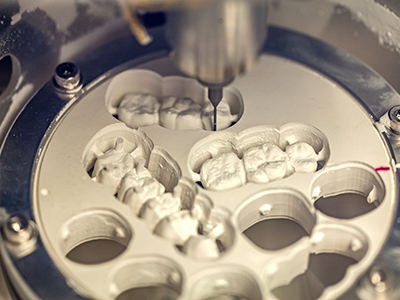
In addition, onsite facilities often support the use of advanced tools and digital workflows such as CAD/CAM design, digital milling, and precise shade-matching instruments. Integrating traditional craftsmanship with modern digital tools enables restorations that combine artistic detail with reproducible accuracy.
Even with meticulous planning and fabrication, restorations occasionally need service — whether a minor adjustment, a repolish, or a repair after accidental damage. An in-house lab makes these interventions quicker and less disruptive for patients. Small repairs can be completed without sending restorations away for extended periods, allowing patients to return to normal function sooner.
Beyond immediate repairs, having the lab onsite supports proactive maintenance strategies. Clinicians and technicians can jointly evaluate wear patterns and material performance during recall visits and recommend refinements that prolong the lifespan of restorations. This collaborative follow-up fosters restorative solutions that remain stable and comfortable over time.
For complex, long-term restorative plans, the continuity provided by an onsite lab simplifies case documentation and future adjustments. Because the same team crafted the original work, they retain institutional knowledge that helps guide future care decisions and ensures consistency across subsequent treatments.
In the office of 360 Dental of Mill Creek, our integrated laboratory approach reflects a commitment to precision, clear communication, and patient-centered restorative care. By combining skilled clinical planning with in-house fabrication, we aim to deliver restorations that look natural, function reliably, and require fewer interruptions for adjustments.
If you’d like to learn more about how our dental laboratory supports restorative and prosthetic solutions, please contact us for more information. We’re happy to discuss how an onsite lab can improve the predictability and quality of your treatment.
An onsite dental laboratory is a fully equipped fabrication space located within a dental practice where skilled technicians create and refine restorations and prostheses. Housing the lab under the same roof as clinical care enables real-time collaboration between clinicians and technicians, which improves communication and reduces the risk of misinterpretation. This proximity supports hands-on control of each fabrication step, from model articulation to final polish.
Because fabrication, inspection, and adjustments occur on site, clinicians can confirm fit, occlusion and aesthetics more directly than when working with an offsite provider. The result is a tighter feedback loop that often produces restorations with better integration into the patient’s existing dentition. Patients typically experience a more predictable restorative process when the laboratory and clinical teams work together in the same facility.
Improved fit and function begin with collaborative planning and precise control of each fabrication stage, from impression or digital scan to final glazing and polishing. Technicians can verify bite relationships on articulators, make incremental adjustments, and consult the treating dentist before finalizing a piece, which reduces the likelihood of occlusal interferences. This hands-on approach preserves tooth structure and promotes restorations that distribute forces appropriately during chewing.
Functional testing and iterative refinements performed in-house allow clinicians to address subtle changes in margin adaptation, contact points and occlusion before placement. By minimizing back-and-forth shipping and interpretation delays, the team can resolve fit issues quickly and efficiently. The outcome is restorations that require fewer post-placement adjustments and provide more comfortable long-term function.
An in-house dental laboratory typically produces a wide range of prosthetic and restorative appliances, including inlays and onlays, porcelain veneers, ceramic crowns, fixed bridges, and both full and partial dentures. Many labs also fabricate implant abutments and implant-supported prostheses, using materials selected for strength and aesthetic harmony. Technicians can tailor designs to each patient’s anatomical and functional needs rather than relying solely on generic templates.
Because the laboratory works closely with the clinical team, technicians can incorporate personalized features such as customized contours, occlusal schemes and shade characterizations. This individualized approach is especially valuable for anterior restorations where translucency and surface texture are critical. The result is restorations that are crafted to match both the appearance and biomechanics of the patient’s smile.
Collaboration occurs through direct conversation, shared visual references, and joint evaluation of models or digital designs so that both functional and aesthetic goals are aligned before fabrication begins. Technicians can attend selected appointments or consult during try-ins to suggest material choices and layering techniques that support the dentist’s clinical plan. This shared decision-making reduces ambiguity and improves the predictability of the final restoration.
Real-time feedback lets the team address questions about margins, preparation design and occlusal schemes immediately, which limits the need for remakes. When clinicians and technicians speak the same language about a case, restorations are more likely to meet expectations for fit and appearance. Ongoing collaboration also builds institutional knowledge that benefits future maintenance and adjustments.
Digital tools such as intraoral scanning, CAD/CAM design, and digital milling streamline the transfer of clinical information to the laboratory, enabling precise, reproducible fabrication. Scans and digital designs can be reviewed jointly by the dentist and technician, allowing virtual adjustments before material is milled or printed. Digital workflows reduce the margin for error inherent in analog impressions and can accelerate turnaround when combined with onsite milling and finishing equipment.
Despite the efficiencies of digital design, high-quality restorations often blend digital precision with manual artistry, particularly for characterization and surface texture. Technicians may apply layered ceramics or hand-polish critical surfaces after milling to achieve natural aesthetics. This hybrid approach leverages the strengths of both technologies and traditional craftsmanship.
Material selection is driven by the functional requirements of the case and aesthetic goals; options may include high-strength zirconia for posterior restorations and layered ceramics for anterior translucency. Technicians and clinicians discuss material properties such as flexural strength, wear characteristics and polishability to choose the most appropriate solution for each tooth. Thoughtful material choice helps balance durability with lifelike appearance.
Quality control typically involves standardized checks at multiple fabrication stages, including model articulation, fit trials, glazing and final polishing inspections. In-house oversight permits hands-on verification of margins, contacts and surface finish before a restoration leaves the bench. These checks reduce the risk of remakes and support consistent outcomes across different prosthetic types.
An onsite laboratory shortens many logistical steps associated with offsite fabrication, which can reduce overall treatment time and the number of appointments needed for multi-step procedures. Because transportation and external scheduling constraints are minimized, small revisions and refinements can often be completed within hours or days rather than weeks. This greater agility improves convenience for patients and helps keep treatment on schedule.
Internal coordination between the clinical and laboratory teams also allows for more predictable sequencing of care and clearer communication about expected timelines. When appointments and lab work are planned together, the practice can better align clinician availability with fabrication milestones. At 360 Dental of Mill Creek, this integrated approach supports efficient case management and a smoother patient experience.
Shade matching begins with clinical assessment using standardized shade guides and can be augmented with instrumental devices to capture color data. Technicians use this information to layer ceramics, adjust translucency and create surface texture that mimic adjacent teeth. Close clinician involvement during try-ins and shade verification ensures the final result harmonizes with the patient’s natural dentition.
Characterization and glazing are iterative processes that balance color, translucency and surface anatomy to achieve a lifelike outcome. Because this work is performed in-house, technicians can make incremental adjustments and consult the dentist during critical stages. The result is a restoration with refined aesthetics and a more seamless integration into the smile.
Minor repairs, repolishing and small adjustments can often be performed quickly when the lab is located within the practice, reducing downtime and restoring function sooner for the patient. The proximity allows technicians to evaluate the restoration, apply targeted repairs and return the appliance without the delays associated with shipping. For removable prostheses, relines and minor rebases are likewise more convenient with an onsite workflow.
Longer term, continuity of care is improved because the same team that fabricated the original restoration retains detailed knowledge of materials and techniques used. That institutional memory helps guide future adjustments and refinements, and it can simplify maintenance planning during recall visits. Patients benefit from consistent stewardship of their restorative work.
Patients can expect a collaborative process in which the dentist and laboratory technician coordinate closely to meet functional and aesthetic goals, and where clinical and laboratory stages are aligned to minimize surprises. They should anticipate clear communication about the number of appointments, the expected sequence of try-ins and the types of materials being considered. Hands-on oversight during fabrication often reduces the need for multiple postoperative adjustments.
During shade selection or try-in visits, patients may be asked for feedback about color and shape as part of the finalization process so the team can refine details. If minor repairs or adjustments are needed later, an onsite lab usually enables faster service and more convenient scheduling. Overall, patients receive a restoration process designed for precision, continuity and predictable results at the office of 360 Dental of Mill Creek.